
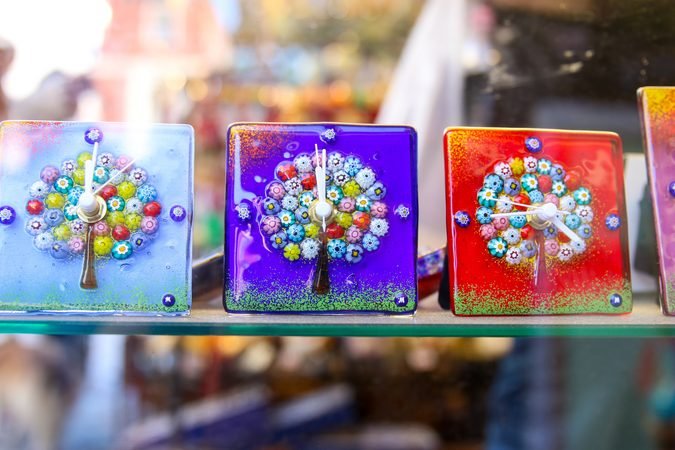
Millefiori Technique: The Art of Creating Floral Glass
Millefiori, meaning “a thousand flowers” in Italian, is a traditional glassmaking technique known for its colorful floral patterns. Glass artists create long glass rods, called murrine, by layering and shaping different colors of molten glass into intricate designs. When these rods are cut into cross-sections, each slice reveals a flower-like pattern.
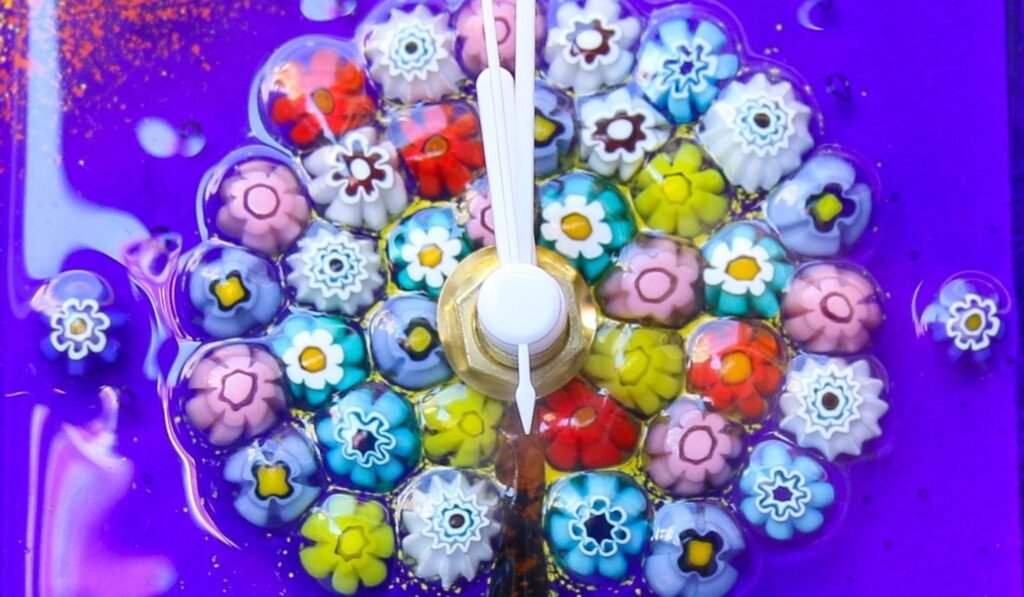
The slices are then arranged and fused into glass beads, paperweights, jewelry, and decorative objects. Millefiori became especially associated with the island of Murano near Venice, where artisans have refined the technique for centuries. Its detailed patterns and vibrant colors make every piece unique, combining careful craftsmanship with the beauty of handmade glass.
The millefiori technique can be adapted to polymer clay by creating a detailed cane with layers of colored clay. The clay is shaped into a simple design, often a flower, leaf, or geometric pattern, then carefully rolled and stretched into a long, narrow cane without losing its image.
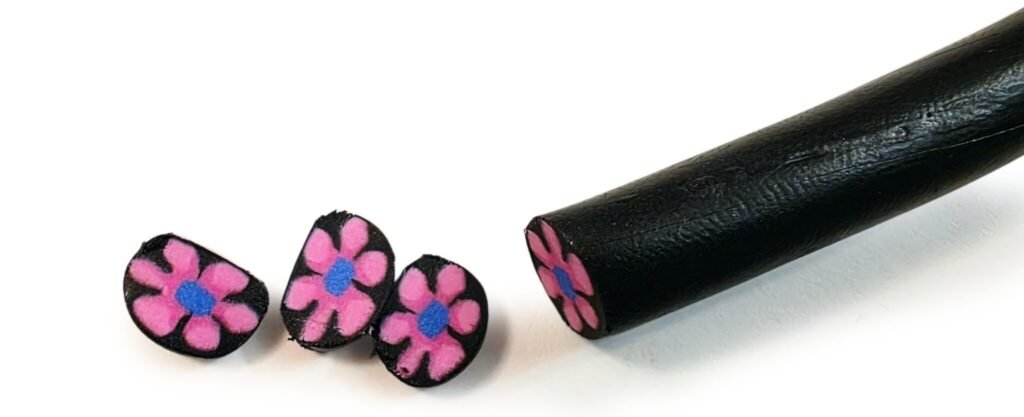
The cane is sliced into thin sections, revealing the same pattern throughout. These slices can be applied to jewelry, beads, buttons, ornaments, and decorative boxes, then gently rolled smooth and baked according to the clay manufacturer’s instructions. This method allows crafters to produce repeated designs that are colorful and highly detailed.
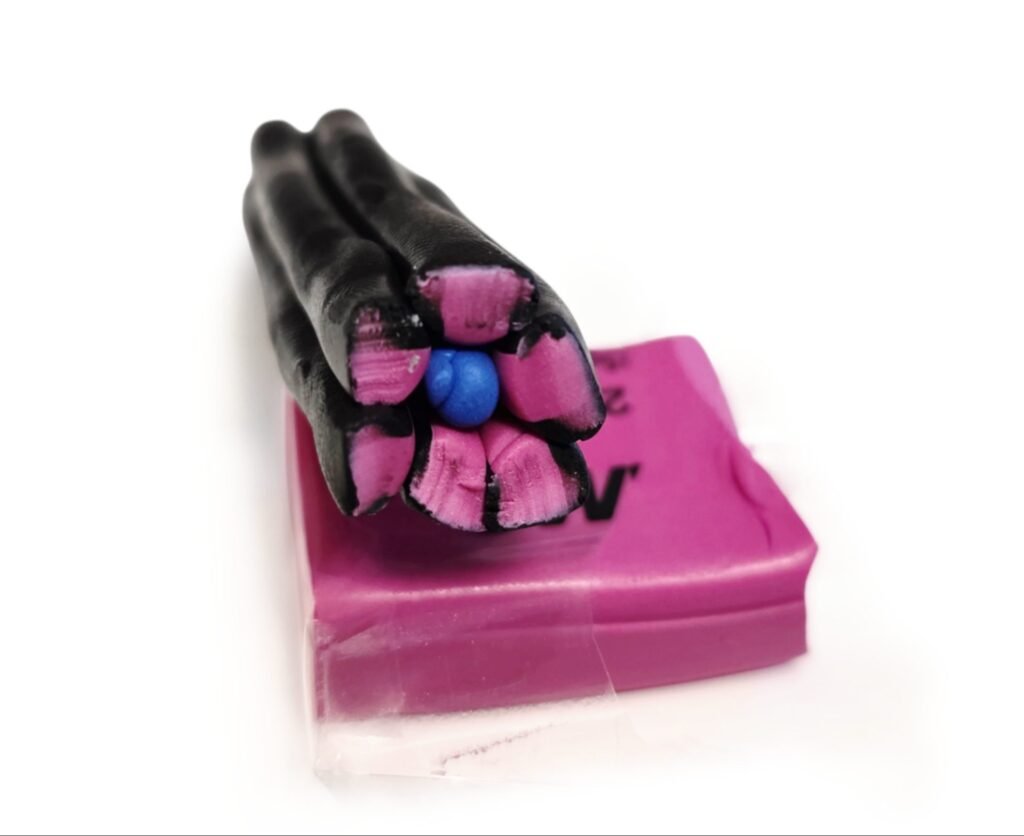
Learn to create your own Millefiori designs in polymer clay here.